Context
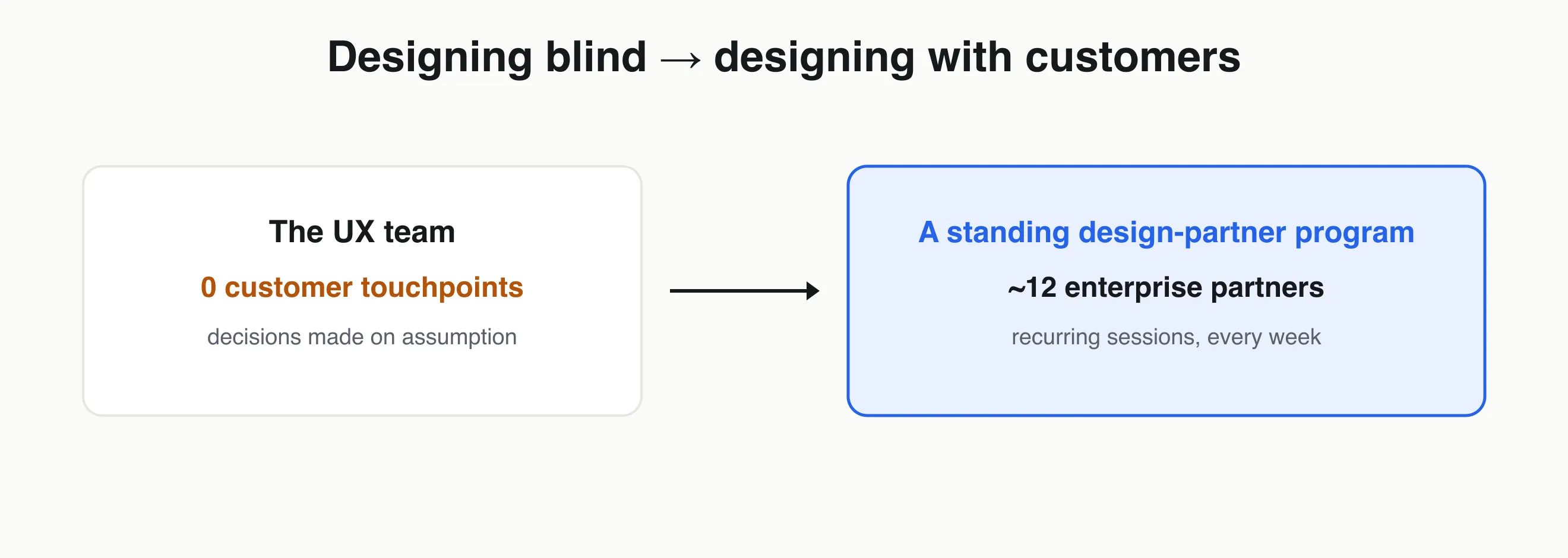
When I joined Palo Alto Networks, something stopped me cold: the UX team had no direct contact with customers at all. None. Coming from teams where I’d talked to users every week — interviews, support calls, feedback sessions — designing a complex security product without ever hearing from the people who use it felt untenable. So my first priority wasn’t a redesign; it was getting us a standing line to our customers.
Building the program
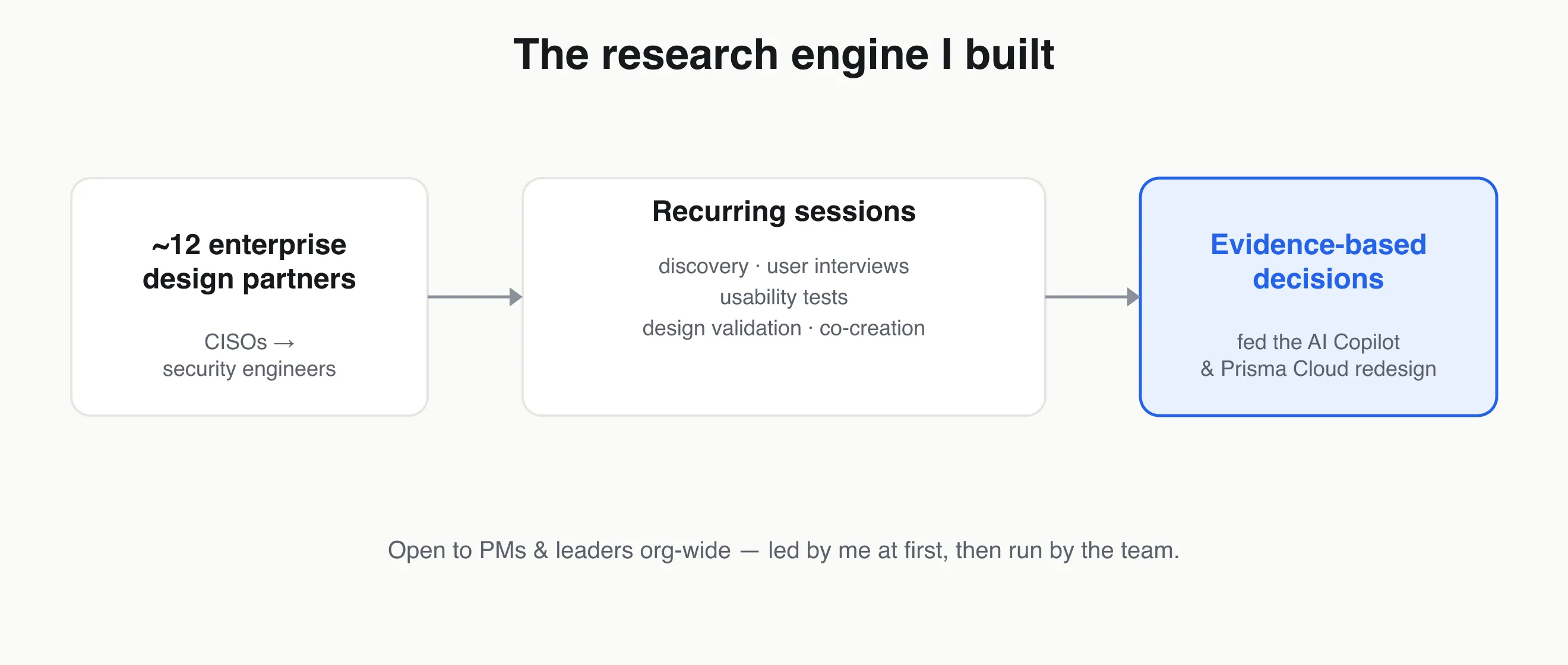
I went where the customer relationships already lived: I reached out to account managers, professional-services engineers, and product leaders for the customers they thought would make good partners. The willingness was there. I drafted outreach to 30+ customers and landed about a dozen design partners, then set up recurring 45–60 minute calls on weekly, biweekly, and monthly cadences. Partners ranged from CISOs to hands-on security engineers at enterprises like Deliveroo, Nestlé, Airbus, and Decathlon.
How it evolved
What started as discovery interviews — use cases, pain points, wishlists — quickly became a full research engine. We used the same standing relationships for user interviews, moderated usability tests (sharing a prototype and watching partners attempt real tasks), design-feedback sessions, and co-creation. It became a gold mine — so much so that other PMs and leaders asked to join to get their own time with these customers.
Leveling up the team
At first I led every call — my team had little experience with direct customer interaction. So I coached them: how to run an interview, how to moderate a usability test without leading the witness, how to turn raw feedback into design decisions. The goal was to work myself out of the seat — and I did. The team went from observing to running sessions solo, owning usability tests and design-validation calls themselves.
Outcomes
- Took the org from zero customer touchpoints to a standing design-partner program — continuous, direct access to the people we designed for.
- That program became the validation backbone for our biggest bets — the AI Copilot and work like prioritizing actionability were shaped and de-risked in these sessions.
- Leveled up the team from no customer experience to independently leading research — a capability that outlasts any single project.
- It became a shared org asset, with PMs and leaders across the org leveraging the partner relationships.
What I learned
You can’t design what you can’t see. The highest-leverage thing I did here wasn’t a feature — it was building the channel that let evidence, not assumption, drive design. And the real multiplier was making it not depend on me: a program the team could run and the whole org could use.